I hail from the depths of the northern wastelands of Sweden, one of the other Laplands where Santa does not live. Despite living abroad for more than a decade, I attempt to keep tabs on the motherland, of course, since I vote and am of the age when – in the olden days – I would be writing unhinged letters to the editor in the local newspaper, which today means ranting on Facebook to innocent bystanders that probably have me muted.
Without getting into specifics of what has changed since I left, one of the weirdnesses about Sweden is that almost all your data is public. Imagine the phonebook, but with your income, the deed to your flat, including every extension ever made, everything available to search without restriction by anyone that is interested.
Traditionally this was used when the tabloids had problems creating content because there were no daily bombings to write about, they would write “the 10 richest people in YOUR BOROUGH, this is how they live”, and this information was just a couple of phone calls away, no whistleblower needed. FOIA on steroids.
Again, without getting into what has changed – the fact has become that a larger number of people are seeking exemptions from this public status, i.e. a protected identity (skyddad identitet) which means that all of your information has to be kept secret, you get a fake address maintained by the tax authority where all your physical official mail is proxied. This concept of protected identity was created to protect battered women from being easily located by their violent ex, but today 50% of the people using the service are social services employees, police officers and others that have active threats to their lives due to their work. I’m not saying it was ok that the system was poorly designed before, but the number of impacted people has risen sharply, so what used to be a once in a million thing for people to encounter, thus explaining some of the friction, it has become a much broader phenomenon.
In a UK context, you know that slip you get from the council where they need to confirm you are correctly registered on the electoral roll, imagine that checkbox to make your data available for advertisers, but that always being checked.
Unfortunately, in the UK, not checking that box has consequences, many automated systems do not believe you exist and you need alternative forms of identity verification – you carry your council tax and gas bill everywhere – whilst if you are in the public register a lot of things work relatively seamlessly, except in Sweden – the proportion of people not generally available in the tax authority’s ledger of all residents is still so small that nobody considers it at any point, meaning the fact that somebody in the family has a protected identity has broad consequences in everyday life, such as that it is impossible to pick up a prescription for your children at the pharmacy because the system does not accept that you are related to your children, and problems collecting parcels because of the way identities are validated to just name a couple. That proxy address the government gives you only works for mail, not for parcels, which I guess makes sense, cause if the tax authority had to get into logistics as well, that might be a step too far, even for Sweden, even if they couldn’t possibly do a worse job than PostNord, but I digress.
I have written about problems like these before, where nobody involved in designing systems intended for use by the general public considers use cases beyond their own nose – because it is very difficult to accurately do so, but in this case I wonder if a radical redesign would be better, with privacy by default and clear consent to share one’s information, you know like GDPR. We all had to do it in every other IT system, why should the public sector be exempt?
In Sweden they have had catastrophic failures of public procurement where a new system for the state rail and road authority was unable to correctly protect state secrets, and similar problems for the public health insurance authority that could not deal with the concept of information classification – a whole class of problems could be solved with a radical redesign. This is one of the things where I think breaking everything is worth it, because retrofitting privacy is nearly impossible, and any attempts at backwards compatibility is like trying to turn DOS into a multi-user operating system – there will be gaps everywhere since the foundational design is inherently counter to what you are trying to achieve.
I keep going on about why software development should consist of empowered cross-functional teams, and a lot of actual experts have written very well – at length – about this, and within manufacturing the Japanese showed why it matters in the 1980s, and the American automotive industry drew the wrong lessons from it, but that is a separate issue. For some light reading on these topics I recommend People Before Tech by Duena Blomstrom and also Eli Goldratt’s The Goal.
Incorrect conclusions from the Toyota Production System
The emergence of Six Sigma was a perfect example of drawing the completely wrong conclusion from the TPS1. In manufacturing, as well as in other processes where you do the exact same thing multiple times you do need to do a few sensible things, like examine your value chain and eliminate waste, so figuring out exactly how to fit a dashboard 20 seconds faster in a car, or provide automated power tools that let the fitter apply the exactly correct torque without any manual settings creates massive value, and communicating and re-evaluating these procedures to gradually optimise further has a direct tie in with value creation.
But transferring that way of working to an office full of software developers where you hopefully solve different problems every single day (or you would use the software you have already written, or license existing software rather than waste resources building something that already exists) is purely negative, causing unnecessary bureaucracy that actually prevents value creation.
Also -the exact processes that have been developed at Toyota or even at its highly successful joint venture with General Motors – NUMMI – were never the success factor. The success factor was the introspection, the empowerment to adapt and inspect processes at the leaf nodes of the organisation. The attempts by GM to bring the exact processes back to Detroit failed miserably. The clue is in the meta process, the mission and purpose as discussed by Richard Pascale’s in The Art of Japanese Management and in Tom Peter’s In Search of Excellence.
The value chain
The books I mentioned in the beginning explain how to look at work as it flows through an organisation as a chain where pieces of work are handed off between different parts of the organisation as different specialists do their part. Obviously there needs to be authorisation and executive oversight to make sure nothing that runs contrary to the ethos of the company gets done in its name, there are multiple regulatory and legal concerns that a company wants to safeguard, and I want to make it clear that I am not proposing we remove those safeguards, but the total actual work that is done needs mapping out. Executives and especially developers rarely have a full picture of what is really going on, as in there can be workarounds created around perceived failings in the systems used that have never been reported accurately.
A more detailed approach that is like a DLC on the Value Stream Mapping process, is called Event Storming, where you gather stakeholders in a room to map out exactly the actors and the information that makes up a business process. This can take days, and may seem like a waste of a meeting room, but the knowledge that come out of it is very real – as long as you make sure not to make this a fun exercise for architects only, but to involve representatives from the very real people involved in these processes day-to-day.
The waste
What is waste then? Well – spending time that does not even indirectly create value. Having people wait for approvals rather than ship them, product creating tickets six months ahead of time that then need to be thrown away because the business needs to go in a different direction. Writing documentation nobody reads (it is the “that nobody reads” that is the problem there, so work on writing good, useful and discoverable documentation, and skip the rest). Having two or more teams work on solving the same problem without coordination – although there is a cost to coordination as well, there is a tradeoff here. Sometimes it is less wasteful for two teams to independently solve the same problem if it leads to faster time to market, as long as the maintenance burden created is minimal.
On a value stream map it becomes utterly painfully clear that you need information before it exists, or that dependencies flow in the wrong direction, and with enough seniority in the room you can make decisions on what matters and with enough individual contributors in the room you can agree practical solutions that make people’s lives easier. You can see handoffs that are unnecessary or approvals that could be determined algorithmically, find ways of making late decisions based on correct data, or find ways of implementing safeguards in a way that does not cost the business time.
As a small cog in a big machine it is sometimes very difficult to know what parts of your daily struggles add or detract value from the business as a whole, and these types of exercises are very useful in making things visible. The organisation is also forced to resolve unspoken things like power struggles so that business decisions are made at a sensible level with clear levels of authority. Especially businesses with a lot of informal authority or informal hierarchies can struggle to put into words how they do things day-to-day, but it is very important that what is documented is the current unvarnished truth, or else it is like you learn repeatedly in The Goal – optimising any other place than the constraint is useless.
But what – why is a handoff between teams “waste”?
There are some unappealing truths in the Goal- e.g. the ideal batch size is 1, and you need slack in the system – but when you think about them, they are true:
Slack in the system
Say for instance, you are afraid of your regulator – with good reason – and you know from bitter experience that software developers are cowboys. You hire an ops team to gatekeep, to prevent developers from running around with direct access to production, and now the ops team relies on detailed instructions form the developers on how to install the freshly created software into production, yet the developers are not privy to exactly how production works. Hilarity ensues and deployments often fail. It becomes hard for the business to know when their features go out, because both ops and dev are flying blind. In addition to this, the ops team is 100% utilised, they are deploying and configuring things all day, so any failed deployment (or, let’s be honest, botched configuration change ops attempts on their own without any developer to blame) always leads to delays, so the lead time for a deployment goes out to two weeks, and then further.
OK, so let’s say we solve that, ops build – or commission – a pipeline that they accept is secure and has enough controls and reliable rollback capabilities to be trusted to hand over to be used by a pair of developers, bosh – we solve the deployment problem, developers can only release code that works, or it will be rolled back without them needing the actual keys to the kingdom, they have a button and observability, that’s all they need. Of course, us developers will find new ways to break production, but the fact remains, rollback is easy to achieve with this new magical pipeline.
Now this state of affairs is magical thinking, no overworked ops team is going to have the spare capacity to work on tooling. What actually tended to happen was that the business hired a “devops team”, which unfortunately weren’t trusted with access to production either, so you might end up with separate automation among ops vs dev (“dev ops team” writes and maintains CI/CD tooling and some developer observability, ops team run their own management platform and liveness monitoring) which does not really solve the problem. The ops team needs time to introspect and improve processes, i.e. slack in the system.
Ideal batch size is 1
Let us say, you have iterations, i.e. the “agile is multiple waterfalls in a row” trope. You work for a bit, you push the new code to classic QA that revise their test plans, and then they test your changes as much as they can before the release. You end up with 60 jira tickets that need QA signoff on all browsers before the release, and you need to dedicate a middle manager to go around and hover behind the shoulders of devs and QA until all questions are straightened out and the various bugs and features have been verified in the dedicated test environment.
A test plan for the release is created, perhaps a dry run is carried out, you warn support that things are about to go down, you bring half the estate down and install updates on the one side of the load balancer, you let the QAs test the deployed tickets. They will try and test as much as they can of the 60 tickets without taking the proverbial, given that the whole estate is currently only serving prod traffic from a subset of the instances, and once they are happy, prod is switched over to the freshly deployed side, and a couple of interested parties start refreshing the logs to see if something bad seems to be happening, as the second half of the system is deployed, the firewall is reset to normal and monitoring is enabled.
So that is a “normal” release for your department, and it requires fairly many people to go to DEFCON 2 and dedicate their time to shepherding the release into production. A lot of the complexity with the release is the sheer size of the changes. If you were deploying a small service with one change, the work to validate that it is working would be minimal, and you would also immediately know what is broken because you know exactly what you changed. With large change sets, if you start seeing an Internal Server Error becoming common, you have no exact clue as to what went wrong, unless you are lucky and the error message makes immediate sense, but unfortunately, if it was a simple problem, you would probably have caught it in the various test stages beforehand.
Now imagine that one month the marquee feature that was planned to be released was a little bit too big and wouldn’t be able to be released in its entirety, so the powers that be decide, hey let’s just combine this sprint with the next one and push the release out another two weeks.
Come QA validation before the delayed release, there are 120 tickets to be validated – do you think that takes twice the time to validate or more? Well, you only get the same three days to do the job, it’s up to the Head of QA to figure it out, but the test plan is longer which makes the release take 10 hours, four hours of which include the bit of limbo while the estate is running on half power.
So yea, you want to make releases easy to roll back and fast to do and rely heavily on automated validation to avoid needing manual verification – but most of all, you want to keep the change sets small. The automation helps that become an easier choice, but you could choose to release often even with manual validation, but it seems to be human nature to prefer a traumatic delivery every two weeks rather than slight nausea every afternoon.
So what are the right conclusions to draw from TPS?
Well, the main thing is go and see, and continuous improvement. Allow the organisation to learn from previous performance, and empower the people to make decision at the level it makes sense, e.g. discussions about tabs vs spaces should not travel further up the organisation than among the developer collective, or some discussions should not be elevated beyond the team. If you give teams accountability on cloud spend, the visibility and the authority to affect change, you will see teams waste less money, but if the cost is hard to attribute and only visible on a departmental level, your developers are going to shrug their shoulders because they do not see how they can effect change. If you allow teams some autonomy on how to solve problems whilst giving them clear visibility on what the Customer – in the agile sense – wants and needs, the teams can make correct small tradeoffs on their level without derailing the greater good. So – basically – make work visible, let teams know the truth about how their software is working and what their users feel about it. Let developers see how users use their software. Do not be afraid to show how much the team costs, so that they can make reasonable suggestions – like “we could automate these three things, and given our estimated running cost, that would cost the business roughly 50 grand, and we think that would be money well spent because a), b) c) […]” or alternatively “that would be cool, but there is no way we could produce that for you for a defensible amount of money, let us look what exists on the market that we can plug into to solve the problem without writing code”.
Everyone at work is a grown-up, so if you think that you are getting unrealistic suggestions from your development teams, consider if you perhaps have hidden too much relevant information from them, and that perhaps if we figure out how to make relevant information easily accessible, we could give everyone a better understanding of not only what is happening right now, but more importantly, what reasonably should happen next. This also works to help upper management understand what each team is doing. If you have internal resistance from this, consider why, because that in itself could explain problems you might be having.
The initialism TPS stands for Toyota Production System, as you may deduce from the proximity to the headline, but I acknowledge the existience of TPS reports in popular culture – i.e. Office Space. I do not believe they are related. ↩︎
I have recently “thought led” on LinkedIn, claiming that the future of software development lies in mob programming. I think this take automatically flips my bozo bit in the minds of certain listeners, whilst for many people that is a statement about as revolutionary as saying water is wet.
Some definitions (based on my vague recollection and lazy googling to verify, please let me know if you know better) about what I mean by mob and pair programming.
Solo development
This is what you think it is. Not usually completely alone in the dark wearing a hoodie like in the films, but at least, you sit at your own screen, pick up a ticket, write your code, open a PR, tag your mates to review it, get a coffee, go through and see if there are PRs from other developers for you to review. Rinse / repeat.
The benefit here is you get to have your own keyboard shortcuts , your own Spotify playlist and can respond immediately to chat messages from the boss. The downside is that regulators don’t trust developers, not alone, so you need someone else to check your work. We used to have a silo for testers, but like trying to season the food afterwards, it is impossible to retrofit quality, so we have modified our ways of working, but the queue of pull requests in a review queue is still a bottleneck, and if you are unlucky, you lose the “race” and need to resolve merge conflicts before your changes can be applied to the trunk of the source tree.
Pair programming
Origins
Pair programming is one of the OG practices of Extreme Programming (XP), developed in 1996 by Kent Beck, Ward Cunningham and Ron Jeffries, and later publicised in the book Extreme Programming Explained (Beck) and basically means one computer, two programmers. One person types – drives – the other navigates. It makes it easier to retain context in the minds of both people, it is easier to retain state in case you get interrupted, and you spread knowledge incredibly quickly. There are limitations of course, if the navigator is disengaged or if the two people have strong egos and you get unproductive discussions over syntactic preference, but that would have played out in pull requests/code review anyway, so at least this is resolved live. In practical terms this is rarely a problem.
Having two people work on code is much more efficient than reviewing after the fact, but it is of course not completely guaranteed, but it is pretty close. The only time I have worked in a development team that produced literally zero defects, pair programming was mandatory, change sets were small, and releases were frequent. We recruited a pair of developers that had already adopted these practices at a previous job, and in passing chat with some of our developers ahead of joining they had mentioned that their teams had zero defects, and our people laughed – because surely that’s impossible. Then they showed us. Test first, pair program, release often. It works. There were still occasions where we had missed a requirement, but that was discovered before code went live, but still of course led us to evolve our ways of working until that didn’t happen either.
Downsides?
The most obvious naive observation would be 2 developers, one computer – surely you get half the output? Now, typing speed is not the bottleneck when it comes to software development, but more importantly – code has no intrinsic value. The value is in the software delivering the right features at the least possible investment of time and money (whether it is creation or maintenance), so writing the right code – including writing only code that differentiates your business from the competition – is a lot more important than writing the most code. Most people in the industry are aware of this simple fact, so generally the “efficiency loss” of having two people operating one computer is understood to outweigh by delivering the right code faster.
On the human level, initially people rarely love having a backseat driver when coding, either you are self-conscious about your typing speed or your rate of typos or you feel like you are slowing people down, but by frequently revolving pairs and roles driver/navigator the ice breaks quickly. You need to have a situation where a junior feels safe to challenge the choices of a senior, i.e. psychological safety, but that is generally true of an innovative and efficient workplace, so if you don’t have that – start there. Another niggle is that I am still looking for a way to do it frictionlessly online. It is doable over Teams, but it isn’t ideal. I have had very limited success with the collab feature in VS Code and Visual Studio, but if it works for you – great!
Overall
People that have given it a proper go seem to almost universally agree on the benefits, even if that began as a thing forced upon them by an engineering manager, seem to appreciate it. It does take a lot of mental effort, because the normal breaks to think as you type get skipped because your navigator is completely on it, so you write the whole time, and similarly the navigator can keep the whole problem in mind and does not have to deal with browsing file trees or triggering compilations and test runs, they can focus on the next thing. All in all this means that after about 6-7 hours, you are done. Just give up, finish off the day writing documentation, reporting time, do other admin and check emails – because thinking about code will have ceased. By this time in the afternoon you will probably have pushed a piece of code into production, so it’s also a fantastic opportunity to get a snack and pat yourself on the back as the monitoring is all green and everything is working.
Mob programming
Origins
In 2011, a software development team at Hunter Industries happens upon Mob Programming as the evolution from practicing TDD and Coding Dojos and applying those techniques to get up to speed on a project that had been put on hold for several months. A gradual evolution of practices, as well as a daily inspection and adaptation cycle, resulted in the approach that is now known as Mob Programming.
2014 Woody Zuill originally described Mob Programming in an Experience Report at Agile2014 based on the experiences of his team at Hunter Industries.
Mob programming is next level Pair Programming. Fundamentally, the team is seated together in one area. One person writes code at the time, usually projected or connected into a massive TV for everyone to be able to see. Other computers are available for research, looking at logs or databases, but everyone stays in the room, both physically and mentally, so everybody doesn’t get to sit at a table with their own laptop open, the focus is on the big screen. People talk out loud and guide the work forward. Communication is direct.
Downsides
I mean it is hard to go tell a manager that a whole team needs to book a conference room or secluded collaboration area and hang all day, every day going forward – it seems like a ludicrously expensive meeting, and you want to expense a incredibly large flatscreen TV as well – are the Euros coming up or what? Let me guess you want Sky Sports with that? All joking aside, the optics can be problematic, just like it would be problematic getting developers multiple big monitors back in the day. At some companies you have to let your back problems become debilitating before you are allowed to create discord by getting a fancier chair than the rest of the populace, so – those dynamics can play in as well.
The same problems of fatigue from being on 100% of the time can appear in a mob and because there are more people involved, the complexities grow. Making sure the whole team buys in ahead of time is crucial, it is not something that can be successfully imposed from above. However, again, people that have tried it properly seem to agree on its benefits. A possible compromise can be to pair on tickets, but code review in a mob.
Overall
The big leap in productivity here lies in the the advent of AI. If you can mob on code design and construction, you can avoid reviewing massive PRs, evade ensuing complex merge conflicts and instead safely deliver features often. The help of AI agents. yet with a team of expert humans still in the loop. I am convinced a mob approach to AI-assisted software development is going to be a game changer.
Whole-team approach – origins?
The book The Mythical Man-Month came out in 1975, a fantastic year, and addresses a lot of mistakes round managing teamwork. Most famously the book shows how and why adding new team members to speed up development actually slows things down. The thing I was fascinated by when I read it was essay 3, The Surgical Team. A proposal by Harlan Mills was something akin to a team of surgeons with multiple specialised roles doing work together. Remember at the time Brooks was collating the ideas in this book, CPU time was absurdly expensive, terminals were not yet a thing, so you wrote code on paper and handed it off to be hole punched before you handed that stack off to an operator. Technicians wore a white coat when they went on site to service a mainframe so that people took them seriously. The archetypal java developer in cargo shorts, t-shirt and a beard was far away still, at least from Europe.
The idea was basically to move from private art to public practice, and was founded on having a a team of specialists that all worked together:
a surgeon, Mills calls him a chief programmer – basically the most senior developer
a copilot, basically a chief programmer in waiting, basically acts as sounding board
an administrator – room bookings, wages, holidays, HR [..]
an editor – technical writer that ensures all documentation is readable and discoverable
two secretaries that handle all communication from the team
a program clerk – a secretary that understands code, and can organise the work product, i.e. manages the output files and basically does versioning as well as keeps notes and records of recent runs – again, this was pre-git, pre CI.
the toolsmith – basically maintains all the utilities the surgeon needs to do his or her job
the tester – classic QA
the language lawyer – basically a Staff Programmer that evaluates new techniques in spikes and comes back with new viable ways of working. This was intended as a shared role where one LL could serve multiple surgeons.
So – why was I fascinated, this is clear lunacy – you think – who has secretaries anymore?! Yes, clearly several of these roles have been usurped by tooling, such as the secretaries, the program clerk and the editor (unfortunately, I’d love having access to a proper technical writer). Parts of the Administrator’s job is sometimes handled by delivery leads, and few developers have to line manage as it is seen as a separate skill. Although it still happens, it is not a requirement for a senior developer, but rather a role that a developer adopts in addition to their existing role as a form of personal development.
No, I liked the way the concept accepts that you need multiple flavours of people to make a good unit of software construction.
The idea of a Chief Programmer in a team is clearly unfit for a world where CPU time is peanuts compared to human time and programmers themselves are cheap as chips compared to surgeons, and the siloing effect of having only two people in a team understand the whole system is undesirable.
But, in the actual act of software development, having one person behind the keyboard, and a group of people behind them constantly thinking about different aspects of the problem being solved, they each have their own niche and they can propose good tests to add, risks to consider as well as suitable mitigations – I think from a future where a lot of the typing is done by an AI agent – the concept really has legs. The potential for quick feedback and immediate help is perfect and the disseminated context across the whole team lets you remain productive even if the occasional team member goes on leave for a few days. The obvious differences in technical context aside, it seems there was an embryo there for what has through repeated experimentation and analysis developed into Mob Programming of today.
So what is the bottleneck then?
I keep writing that typing speed is not the bottleneck, so what is? Why is everything so bad out there?
Fundamentally code is text. Back in the day you would write huge files of text and struggle to not overwrite each other’s changes. Eventually, code versioning came along, and you could “check out” code like a library, and then only you could check that file back in. This was unsustainable when people went on annual leave and forgot to check their code back in, and eventually tooling improved to support merging code files automatically with some success.
In some organisations you would have one team working the next version of a piece of software, and another team working on the current version being live. At the end of a year long development cycle it would be time to spend a month integrating the new version into the various fixes that had been done to the old version over the whole year of teams working full time. Unless you have been involved in something like that, you cannot imagine how hard that is to do. Long lived branches become a problem way before you hit a year, a couple of days is enough to make you question your life choices. And, the time spent on integration is of literally zero value to the business. All you are doing is shoehorning changes already written in order to get the new version in a state where it can be released, that whole month of work is waste. Not to mention the colossal load on testing it is to verify a year’s worth of features before going live.
People came up with Continuous Integration, where you agree to continuously integrate your changes into a common area making sure that the source code is releaseable and correct at all times. In practice this means you don’t get to have a branch live longer than a day, you have to merge your changes to the agreed integration area every day.
Now, CI – like Behaviour Driven Development has come to mean a tool. That is, do we use continuous integration? Yeah, we have Azure DevOps, the same way BDD has become we use SpecSharp for acceptance tests, but I believe it is important to understand what words really mean. I loathe the work involved in setting up a good grammar for a set of cucumber tests in the true sense of the word, but I love giving tests names that adhere to the BDD style, and I find that testers can understand what the tests do even if they are in C# instead of English.
The point is, activities like the integration of long lived branches and code reviews of large PRs become more difficult just due to their size, and if you need to do any manual verification, working on a huge change set is inherently exponentially more difficult than dealing with smaller change sets.
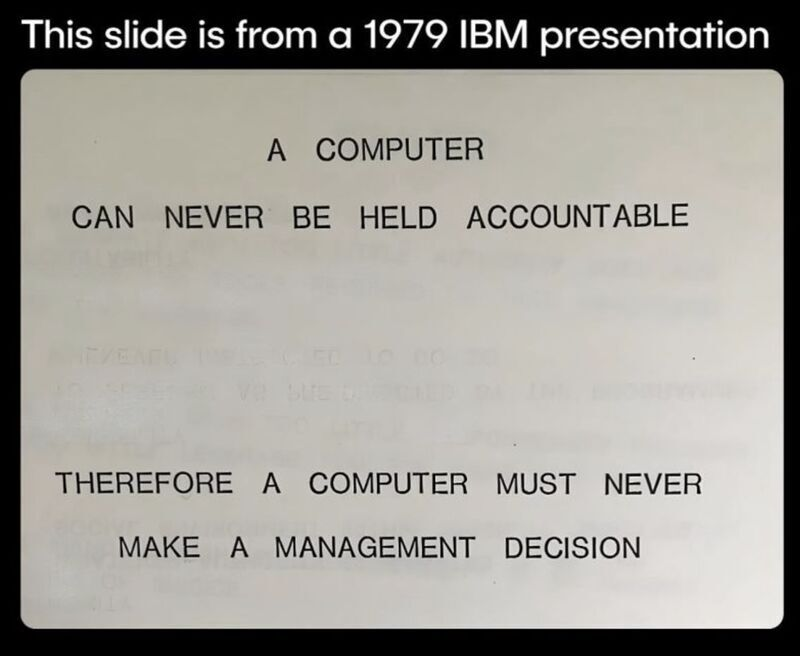
But what about the world of AI? I believe the future will consist of programmers herding AI agents doing a lot of the actual typing and prototyping, and regulators deeply worried about what this means for accountability and auditability.
The solution from legislators seem to be Human-in-the-Loop, and the only way to avoid the pitfalls of large change sets whilst giving the business the execution speed they have heard AI owes them, is to modify our ways of working so that the output of a mob of programmers can be equated to reviewed code – because, let’s face it – it has been reviewed by a whole team of people – and regulators worry about singular rogue employees being able to push malicious code into production, so if anything, if an evildoer wants to bribe developers, rather than needing to bribe two, they would now have to bribe a whole team without getting exposed, so I think it holds up well from a security perspective. Technically of course, pushes would still need to be signed off by multiple people for there to be accountability on record and to prevent malware from wreaking havoc, but that is a rather simple variation on existing workflows, the thing we are trying to avoid is an actual PR review queue holding up work, especially since reviewing a massive PR is what humans do the worst at.
Is this going to be straightforward? No, probably not, as with anything, we need to inspect and adapt – carefully observe what works and what does not, but I am fairly certain that the most highly productive teams of the future will have a workflow that incorporates a substantial share of mob programming.